Prostatitis is a common disease among the male half of humanity, characterized by inflammation of the prostate gland.Pathology can occur against the background of infection of the prostate, and can also be a manifestation of age-related changes and a passive lifestyle, appearing against the background of degenerative disorders.
Prostatitis can be acute and chronic, the latter occurs in the absence of timely treatment for acute prostatitis.Chalcolithic prostatitis is a complicated form of chronic prostatitis.This condition causes pain, severely disrupts the urination process, and may even require surgery.
Chronic calculous prostatitis
Chalcolithic prostatitis is a chronic inflammatory disease of the prostate gland, in which the formation of stones (stones) occurs.The disease always occurs against the background of slow and prolonged chronic prostatitis and is very often a complication of it.
According to statistics, the disease is detected in about 8% of all men who consult a urologist or andrologist for consultation.Chalcolithic prostatitis occurs in patients over the age of 40.At this age the disease is associated with sexually transmitted diseases;after 50 years, the pathology manifests itself against the background of prostatic adenoma, and after 70 years against the background of male menopause.
The calculous form of prostatitis is considered the most serious.It is poorly tolerated by patients, causes a lot of inconvenience and is quite difficult to treat.And all because stones appear in the excretory ducts consisting of lime salts, phosphates and other dense elements.
Causes of chalcolithic prostatitis
Stones can be exogenous and endogenous.Exogenous stones are formed only if urethro-prostatic reflux is observed, when urine does not leave the body, but is thrown into the prostatic ducts.The salts contained in the urine are deposited in the prostatic ducts, compact and form stones.

And endogenous ones are formed against the background of stagnation in the prostate gland, which is precisely what is observed in chronic prostatitis.Furthermore, stones can be primary and secondary.
The primary ones are formed right in the prostate and its ducts, while the secondary ones migrate from the kidneys or bladder.The latter situation is possible in cases where a man suffers from urolithiasis.
The cause of stone prostatitis is congestion of the prostate against the background of advanced chronic bacterial or non-bacterial prostatitis.The following factors can cause this condition:
- Passive lifestyle, lack of movement in general, sedentary work.
- Lack of sex.In this case the prostatic secretion does not come out, but stagnates.
- Benign prostatic hyperplasia (prostatic adenoma).
- Chronic infections of the genitourinary system.
- Brazen lifestyle, alcohol abuse, promiscuity.
- Constant stress, chronic fatigue.
- Vitamin deficiency, poor diet.
- Constant hypothermia.
- I refuse to treat prostatitis for a long time.
In general, the causes of stone prostatitis do not differ from the causes of chronic prostatitis.
Symptoms of chalcolithic prostatitis
Signs of Chalcolithic Prostatitis:
- Aching pain in the groin, radiating to the coccyx, scrotum.
- Pain during urination, ejaculation, defecation.
- Urinary disorders, especially urinary retention, slow flow, frequent urgency.
- Blood may be present in semen and urine.
- Secretion from the urogenital canal.
- Erectile dysfunction at various levels, especially slow erection, lack of erection, premature ejaculation.
It is worth noting that stone prostatitis can be completely asymptomatic, not differing in manifestations from slow chronic prostatitis.But stones that form in the prostate over a long period of time lead to serious complications, including abscess of the gland, its complete degradation and the development of vesiculitis.
Pharmacological treatment of chalcolithic prostatitis
Chronic calculous prostatitis, detected early, can be treated conservatively.In this case, the following groups of drugs are prescribed:
- Antibiotics for bacterial infections.Individually selected.
- Non-steroidal anti-inflammatory drugs.
- Antispasmodics and analgesics to relieve pain.
- Alpha-blockers to restore fluid outflow.
- Vitamins to strengthen general immunity.

Conservative treatment involves attending physical therapy, for example, magnet, electrophoresis, ultrasound.But prostate massage for chalcolithic prostatitis is strictly contraindicated.The physical impact will lead to trauma to the prostate with stones, increased swelling and pain.
During the treatment period it is necessary to follow a diet.It is forbidden to consume alcohol, fatty, spicy, salty and unhealthy foods.It is necessary to adhere to the principles of proper nutrition, eat as many fruits and vegetables as possible to strengthen the immune system.
If conservative treatment is ineffective or the stones are already very large, surgical treatment will be necessary.If there is an abscess, the prostate opens and pus also comes out along with the stones.
If the stones are mobile, an attempt is made to push them into the bladder, followed by dissolution by nonsurgical lithotripsy.In the most serious cases, in the presence of large and fixed stones, as well as prostatic adenoma, complete removal of the gland is practiced.Radical treatment is used quite rarely, in advanced cases.
Treatment of calculous prostatitis with traditional methods
It is better not to treat chalcolithic prostatitis with folk remedies, this way you can worsen the disease and even lose the organ.Folk remedies can be used exclusively in complex therapy prescribed by an andrologist after an examination.But before you start taking this or that drug, it is better to consult your doctor about the compatibility of the drug with prescribed drugs.
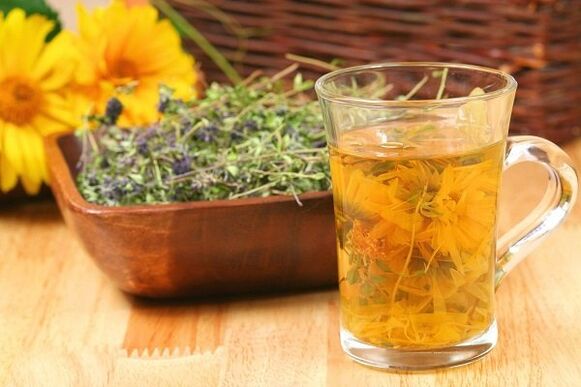
For chalcolithic prostatitis, folk remedies are recommended that have an anti-inflammatory, analgesic effect, and also interrupt congestive processes.These means include:
- A decoction of dog rose roots.
- Sage decoction.
- Birch bark infusion with lemon juice.
- A decoction of adonis, chickweed and tough straw, mixed in equal proportions.
- Infusion of parsley roots and vegetables.
- Juice treatment is also useful for strengthening the immune system and fighting inflammation.
For culcular prostatitis, do not use therapeutic enemas and homemade rectal suppositories.The exception is situations where the drugs are prescribed by a doctor.The introduction of homemade suppositories can lead to irritation of the prostate and the appearance of swelling.
Prevention of prostatitis
Currently prostatitis is a very common disease.Every 2 men after 40-45 years suffer from one degree or another of the disease.Therefore, experts urge men to take responsibility for their health and prevent prostatitis from a young age.
Prevention of culcular prostatitis consists in timely and adequate treatment of acute inflammation of the prostate gland.We also recommend following these tips:
- Have sex regularly so that the prostate juice circulates and does not stagnate.
- Lead an active lifestyle, do exercises, play sports.
- Dress for the weather, don't get too cold.
- Eat well, avoid vitamin deficiency.
- Avoid promiscuity, protect yourself from sexually transmitted diseases.
Therefore, the main prevention is to maintain a healthy lifestyle and correct sexual activity.If a man takes care of his health, he will definitely be able to avoid chronic prostatitis.
Conclusion
Chalcolithic prostatitis is an advanced form of chronic prostatitis, but it is very common.This suggests that most men refuse treatment for prostatitis, which is what they subsequently suffer from.
The sooner treatment for prostatitis begins, the better it is for the patient.In most cases, stone formation can be avoided by promptly consulting an andrologist.